
NEOCH’s Action with Tanisha’s Law
For the last few years, NEOCH and our partners worked to realize a dream of crisis response with empathy, access, and community healing. In 2014, the family of Tanisha Anderson did not receive that nor the justice they deserved, so they began seeking positive policy change for all residents in the City of Cleveland.
Through many struggles and setbacks, the Andersons and a broad coalition of activists, other aggrieved families, law students, clinicians, clergy, and non-profit organizations have worked to elevate the need for and existing examples of non-police community response to crisis. Their cause has a simple premise: send the right people with the right training and resources to the job.
Eventually, an ordinance co-sponsored by Cleveland City Council members Stephanie Howse-Jones and Charles Slife and former Council member Rebecca Maurer was drafted and workshopped through a series of community engagement activities. The resulting legislation has been named Tanisha’s Law—a much-needed health first response from 911 that will save lives.
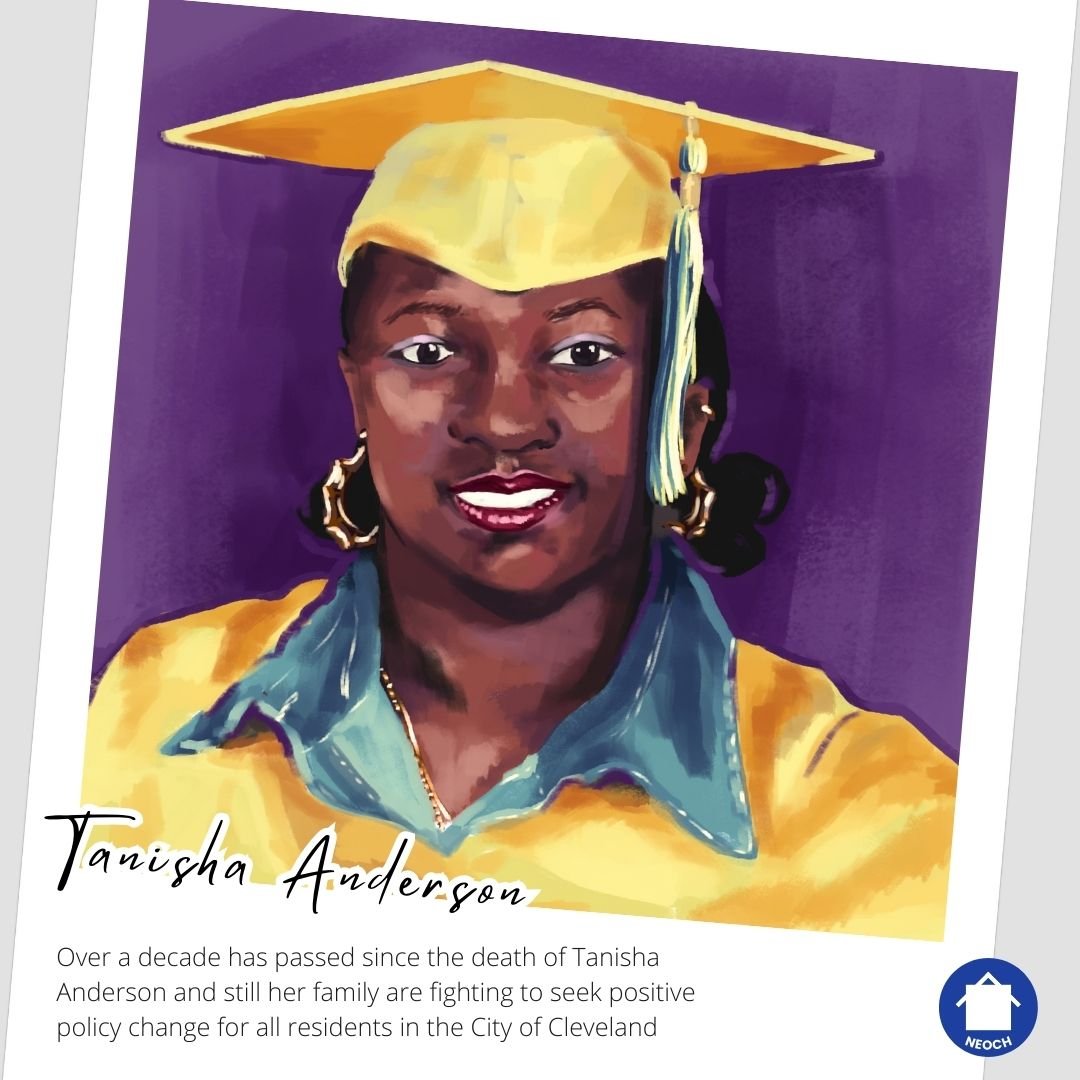
Who is Tanisha?
On November 12, 2014, Tanisha Anderson, a 37-year-old Cleveland mother, was in the throes of a mental health crisis. After much consideration, her family decided to call 911 so she could receive a psychiatric evaluation and medication. What happened next was a nightmare that no family deserves to experience. Instead of patience, empathy and care, Tanisha received brutal restraint by officers until her body went limp. There on the freezing pavement, Tanisha would lie for 20 minutes until an ambulance arrived. She was pronounced dead at the hospital two hours later. Her uncle, Micheal Anderson, recounts her last words being the Lord’s Prayer. Over a decade later, Tanisha Anderson’s family are still fighting to change policies around mental health crisis response so that another tragedy like Tanisha’s avoidable death does not occur.
What is Tanisha’s Law?
Tanisha’s Law is a legislative policy change around Cleveland’s response to mental health crises. Tanisha’s Law will embed mental health professionals into the City’s emergency dispatch system and divert calls that do not need police involvement to dedicated response teams. These teams will be comprised of licensed social work clinicians, certified peer responders, and EMTs when appropriate. The program created by Tanisha’s Law will live within the current EMS structure, with a newly created deputy chief to oversee the implementation. In partnership with community members and service providers, Cleveland will begin a journey to deliver care responses.
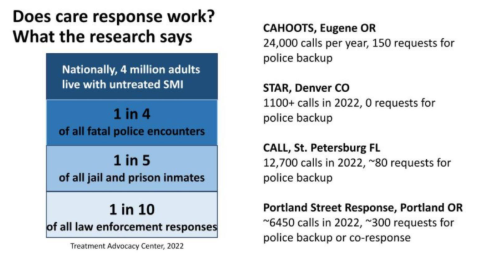
“In New Jersey’s pilot program of its care response team, a whopping 98 percent of crisis-related cases that went to clinicians did not end up needing police dispatched. Same goes in Colorado, over a one-year span: out of 25,900 incidents, little more than 500 of those calls required cops.” (Source: Cleveland Scene)
Despite the positive data proving how community crisis response programs in other cities across the country work to both decrease police response times, lower cost per-response, interrupt carceral cycles and create better outcomes for clients, the City of Cleveland, for years, has delayed starting its own care response program and repeatedly moved the goal posts without taking action.
During that period NEOCH
Partnered with Policy Matters to survey our unhoused neighbors about what their experiences have been with first responders and what they desire as a response to crisis;
Helped convene cohort learning opportunities with other cities successfully implementing care response programs;
Partnered with the Cuyahoga County Jail Coalition to host a series of “Care not Cages” teach-ins about the concept and efficacy of non-police community response to crisis;
Served on the Mental Health Response Action Committee that was created as a requirement of the ongoing DOJ Consent Decree with the City of Cleveland;
Lent our voice to the public debate of emergency response on City Club panels as well as public comment opportunities at both the City and County Council meetings;
Pushed for the creation of and sat on the Community Advisory Board of the ADAMHS board-funded Care Response Pilot.
Became a founding organization of the Cleveland Power Alliance, which made Tanisha’s Law its first legislative priority
This coming Monday, February 2, 2026, Tanisha’s Law will be introduced at the regularly scheduled City Council meeting for a full council vote. Several advocates, including NEOCH’s Director of Organizing and Advocacy Josiah Quarles, will give testimony at the beginning of the meeting.
OUR CALL TO ACTION: PACK CITY COUNCIL CHAMBERS (601 Lakeside Ave. Room 201) ON MONDAY, FEBRUARY 2ND AT 7pm to show the overwhelming community support for the passage of this monumental ordinance.
If you are unable to attend, a letter of support to your councilperson is always appreciated.
Lastly, the Social Justice Law Center and the Social Justice Institute will host an event Saturday, February 7, from noon - 2pm, honoring the life and legacy of Tanisha Anderson. REGISTER HERE to RSVP for the event and continue the relationship building we will need to ensure that the program is responsive and fully serves its purpose for the benefit of Clevelanders who have already waited too long.