
The continuation of Anti-homelessness legislation hits Louisiana
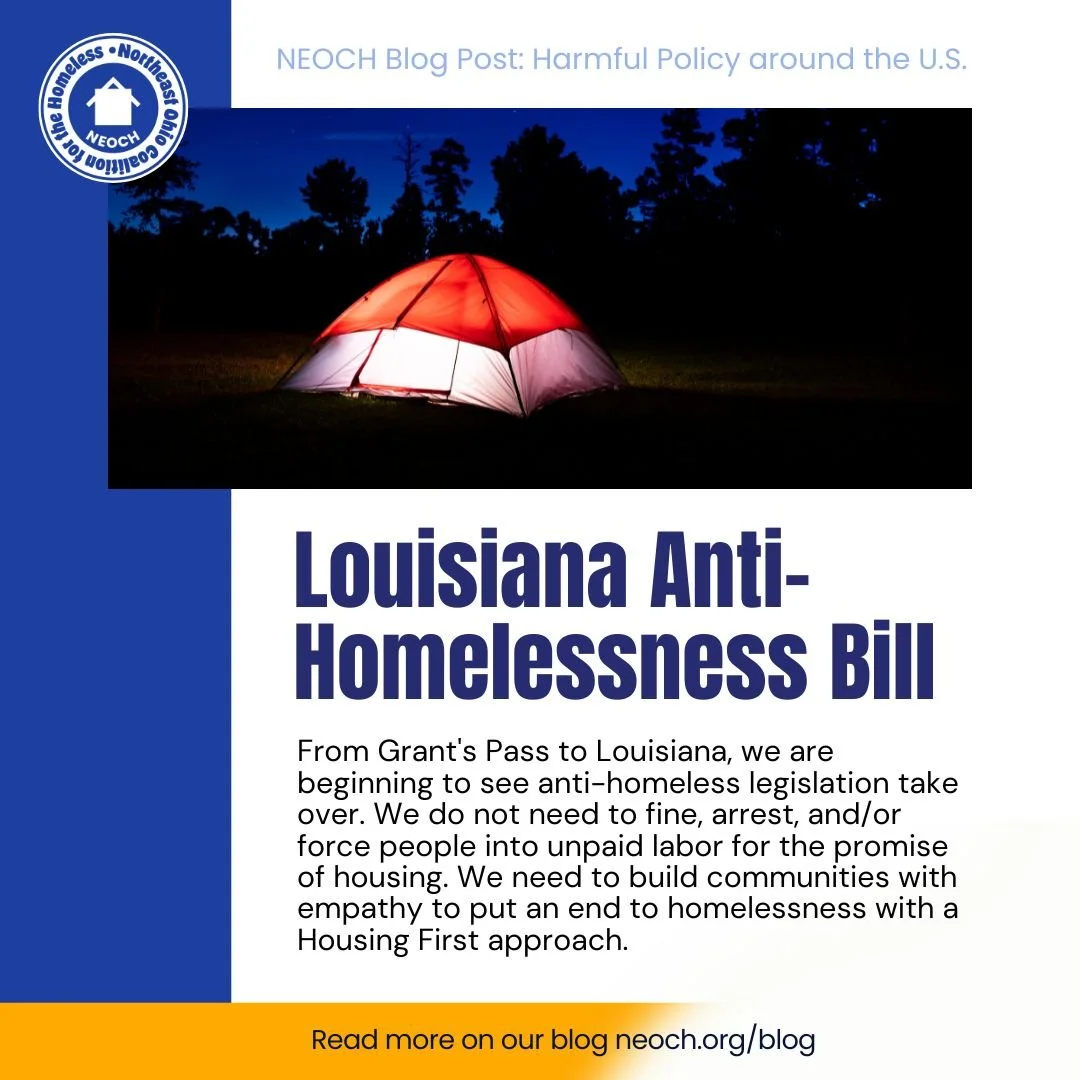
In 2024, the City of Grants Pass v. Johnson decided that local governments could give criminal penalties for camping on public land, stating that it is not cruel and unusual punishment. This means that anyone caught sleeping in public spaces could be fined or even jailed for the crime of not having a safe home to rest in. This ignores the homelessness system’s issues and creates a cruel cycle of housing insecurity.
For example, if a shelter is full and a homeless individual is turned away, or if someone is waiting for the slow process of finding housing, they are in need of a place to rest. Often, they cannot afford motels, hotels, or other housing options. Waiting for the slow process of applying for assisted housing. People need places to rest as they wait to be slotted into housing. If a homeless person is fined for sleeping in public and they cannot afford the fine, they can be arrested. Then that arrest will stay on their record, which will only make it more difficult to find stable housing. Which leads them to again need a place to sleep... This cycle will continue until many are just permanently jailed or shipped to another city to start over. This process also ignores the full shelters, slow waiting times for services, and program changes caused by administrative changes. Many non-profit organizations, like NEOCH, warned that the passing of Grants Pass v. Johnson will have a ripple effect across the U.S. We are seeing that ripple effect today in Louisiana.
Louisiana voted to pass a cruel bill, nicknamed the “Streets to Success” bill. That would criminalize homelessness by charging people for sleeping in public spaces. Unhoused individuals could be punished by a fine up to $500, imprisonment for up to six months, or both. Repeat offenders could face one to two years in prison with hard labor and a $1,000 fine. Those who are convicted of sleeping outdoors can be given the option to avoid jail time by entering into a mandatory treatment program for at least 12 months. Local governments are authorized to set up semi-permanent camps in areas where defendants are required to stay and receive treatment. If an unhoused individual cannot afford the mandatory treatment program (averaging around $4,400 per week in Louisiana), they are required to perform unpaid labor for the state or local community center. This ignores the fact that if someone could afford this expensive treatment program, they would not need housing assistance and would not be on the streets. And adds a concerning layer of indentured slavery.
Cleveland and other cities across the United States propose a Housing First approach. New Orleans City Councilmember Lesli Harris opposed the bill, pointing to the success of the city’s Home for Good program, which takes a “Housing First” approach to homelessness. Bring those in need to stable housing and then work on the rest of their needs. Once people are housed, they can worry about unemployment, addiction, and mental health services, and focus on the future.
We at NEOCH and Cleveland believe in a Housing First approach to ending homelessness. In 2025, 429 individuals experiencing unsheltered homelessness engaged with NEOCH outreach services.176 community calls were responded to, each within a 48-hour time frame, with call requests coming from City Council offices, local businesses, and neighborhood residents. We developed housing plans for 223 individuals, including 157 new participants in NEOCH outreach services. And over 100 individuals secured permanent housing through NEOCH’s street outreach team. All of this was done through a Housing First approach.
It feels dystopian to compare costs, but it is cheaper to use a Housing First model than to jail or ignore the problem.
“Through our Home for Good program, we house an individual for roughly $21,844 per year. By comparison, jailing that same person costs an average of $51,000—and failing to act at all can cost up to $55,000 in emergency room visits and crisis rehousing,” Harris said. -Commondreams.org
We need to build communities with empathy to put an end to homelessness. We must break the toxic cycle of fines, prison, and unpaid labor.
Sources:
https://housingnothandcuffs.org/2026/04/16/statement04162026/